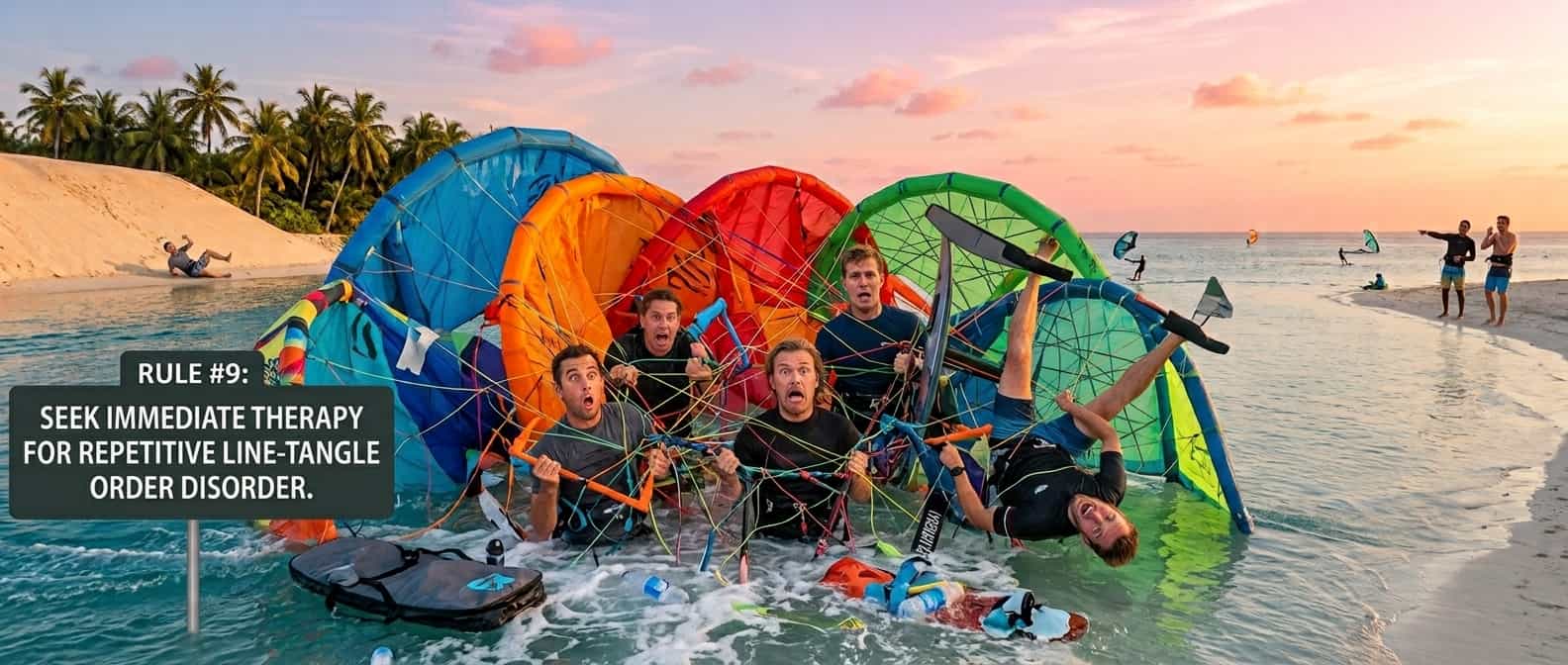
Navigating a busy kitesurfing spot can feel intense without clear guidelines. Recognizing the official International Kiteboarding Organization (IKO) Right-of-Way rules ensures everyone stays safe while enjoying the water.
To prevent collisions, many modern kite spots now set up designated zones for different disciplines—separating hydrofoilers, wing foilers, beginners, and freestylers into their own dedicated areas. It’s an awesome setup that drastically cuts down on accidents.
However, that is far from true for every spot—and many of our local home spots are no exception. World-famous destinations like Dakhla, for instance, are often a complete "free-for-all" where it feels like every rider for themselves. In Dakhla's main lagoon (just like at many un-zoned beaches back home), everyone shares the exact same stretch of water: high-speed foilers carving lines next to unhooked freestylers, wingers, and total beginners trying to keep their kite in the air.
Unfortunately, not everyone on the water knows or has learned the right-of-way rules, and several accidents happen every season that could easily be avoided by sticking to basic principles. When riders utilize the entire lagoon or beach area—tacking back and forth across wide corridors without a designated zone system—knowing who gives way to whom is vital.
Personally, I tend to find my own little pocket where there is clear passage, taking shorter runs and turning well in advance to avoid any danger. This strategy lets me essentially enjoy a spot all to myself away from the traffic, but whenever you transition through the main crowd, knowing these core rules is essential.
The 8 Essential IKO Right-of-Way Rules
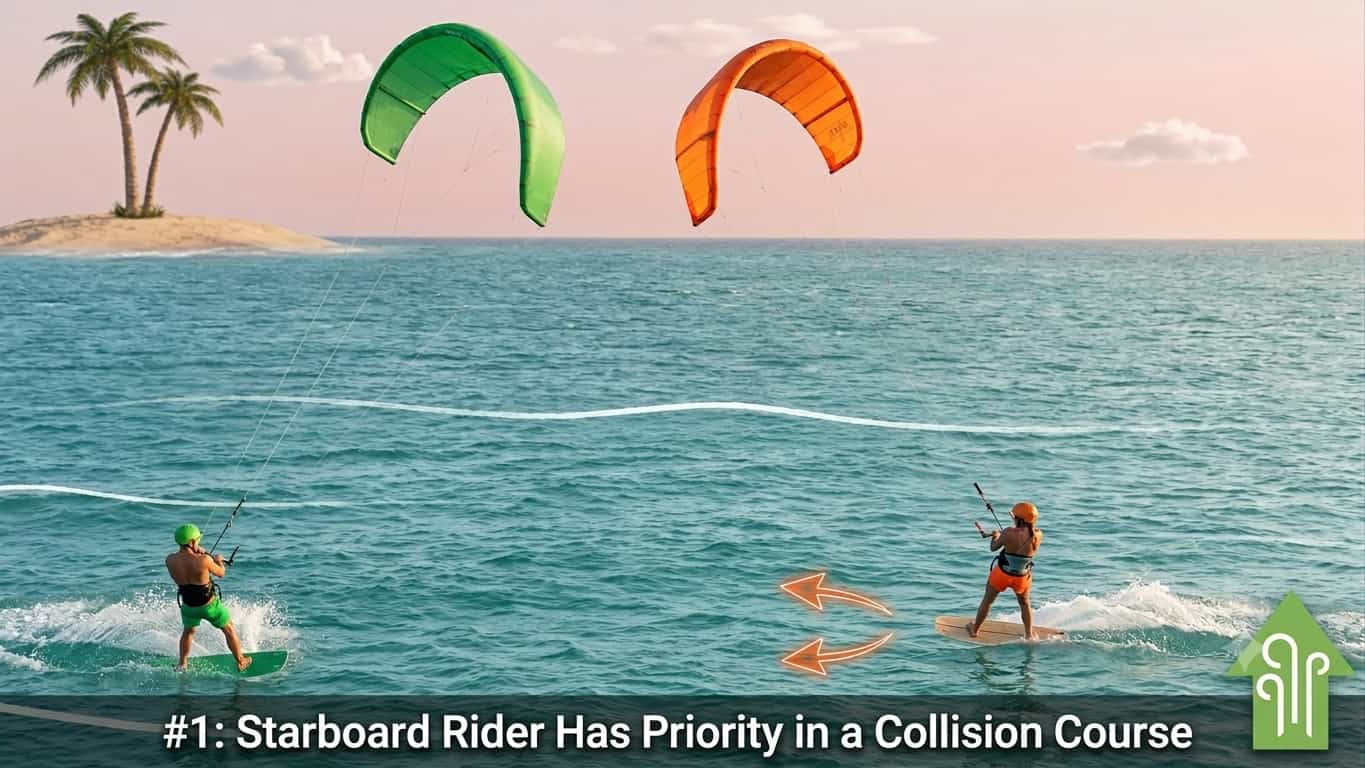
- Starboard Tack Has Priority: The rider traveling with their right hand forward (wind coming over the starboard side) has the right-of-way. The oncoming rider must yield and change course early.
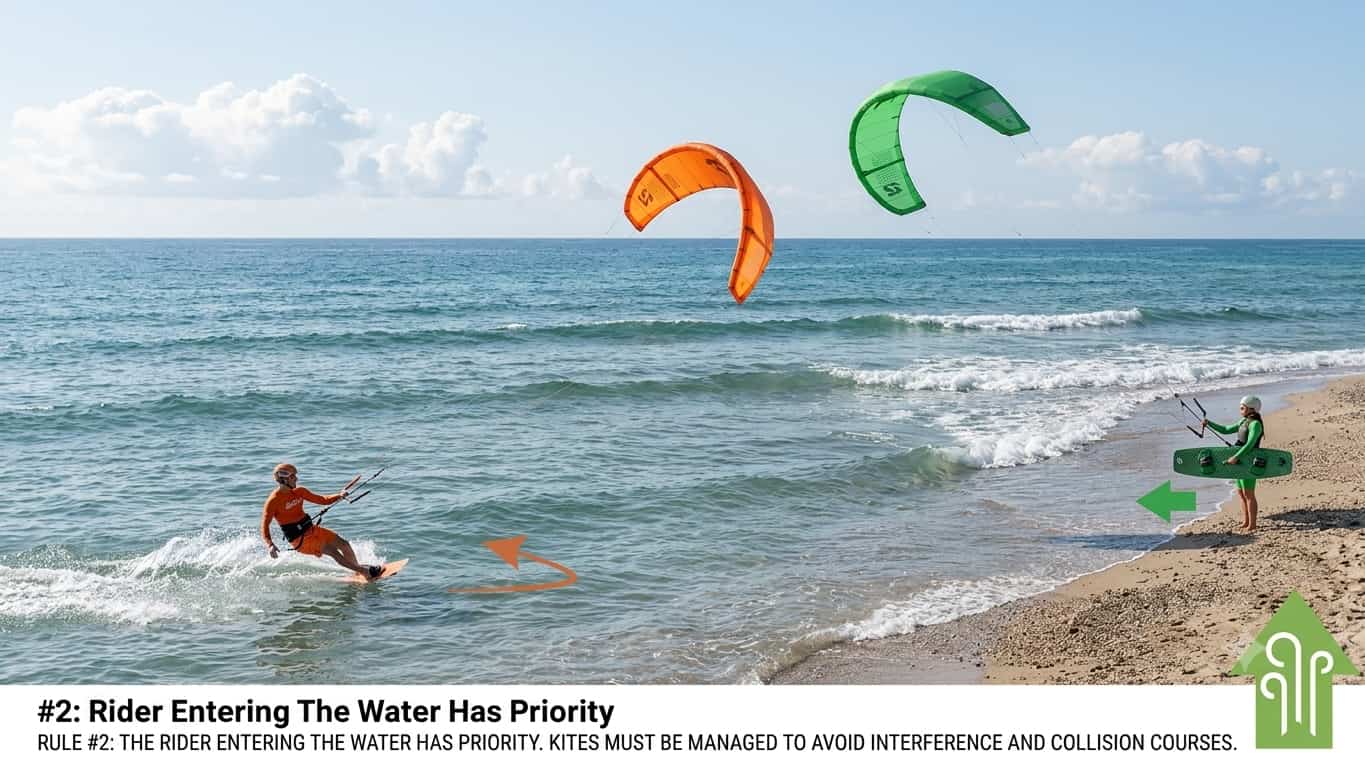
- Rider Entering the Water Has Right-of-Way: A kiter walking out into the water from the beach takes priority over a rider heading back toward the shore.
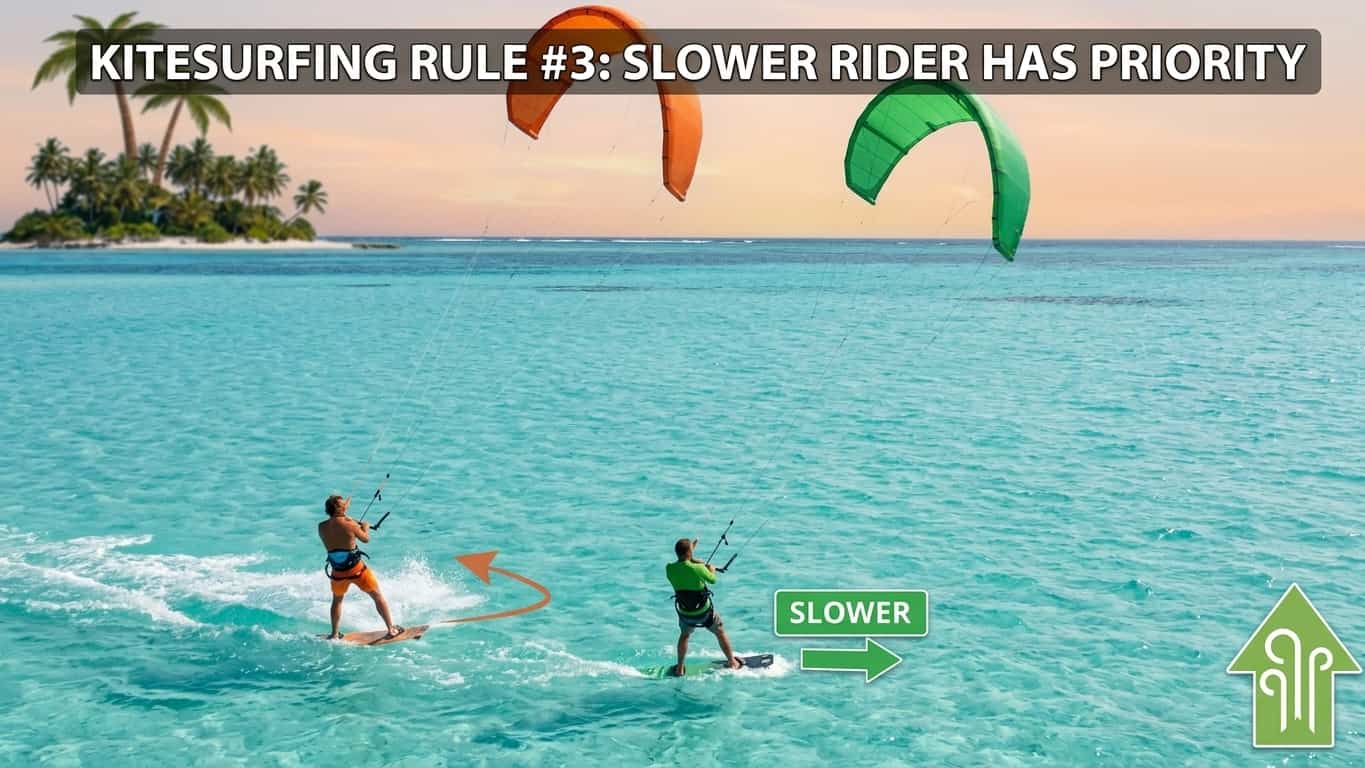
- Slower / Ahead Rider Has Priority: When two kiters travel in the same direction, the rider ahead or moving slower holds the right-of-way. If overtaking, maintain a wide, safe distance.
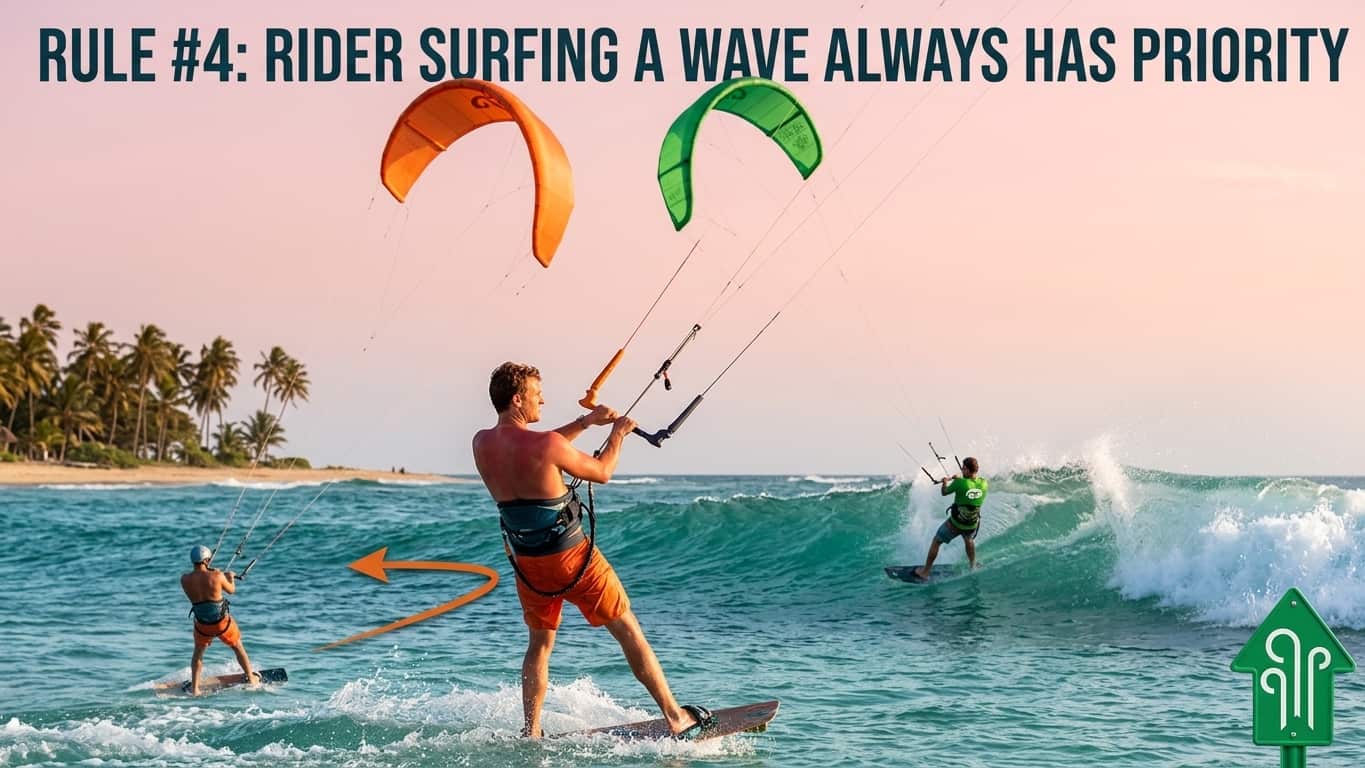
- Rider Surfing a Wave Always Has Priority: The kiter actively riding a wave takes precedence over kiters jumping or heading out against the waves.
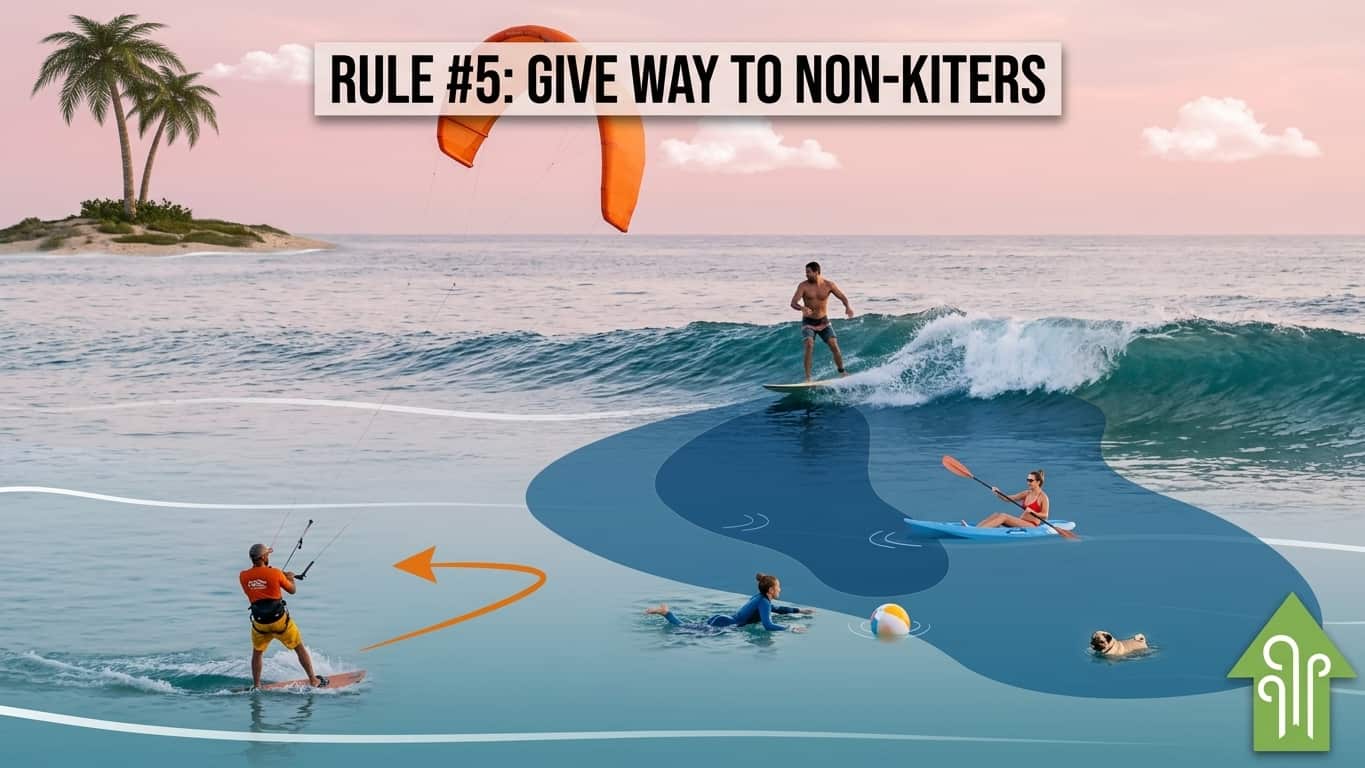
- Give Way to Non-Kiters & Mixed Craft: Always yield to swimmers, windsurfers, and non-kiter craft. Within the kite family, fast-moving craft (like hydrofoils) should give plenty of clearance to slower or less maneuverable riders, especially beginners.
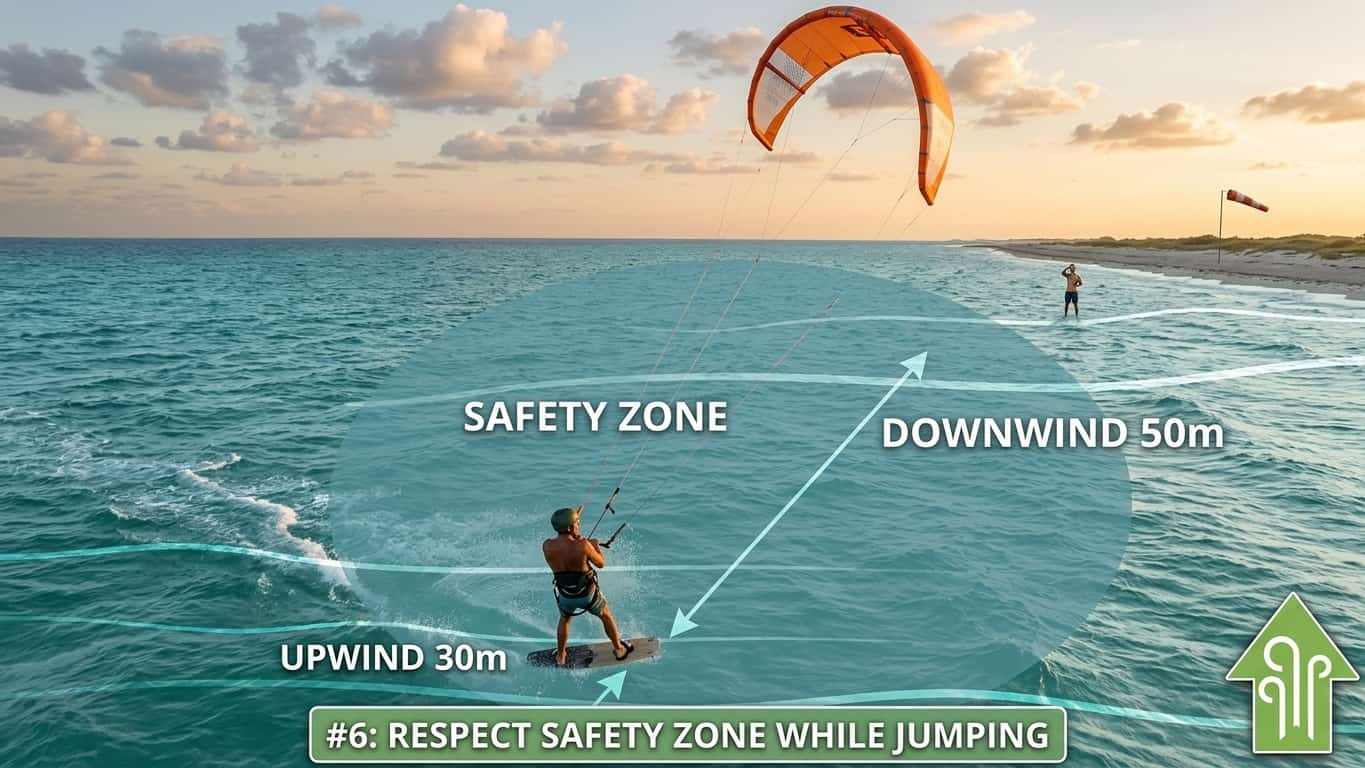
- Respect the Safety Zone While Jumping: Before sending a jump, ensure a clear buffer zone of at least 50 meters downwind and 30 meters upwind.
-
Upwind Kite Up, Downwind Kite Down: When passing another kiter:
- The upwind rider steers their kite high (above 45°).
- The downwind rider keeps their kite low (below 30°). This simple adjustment prevents catastrophic line tangles.
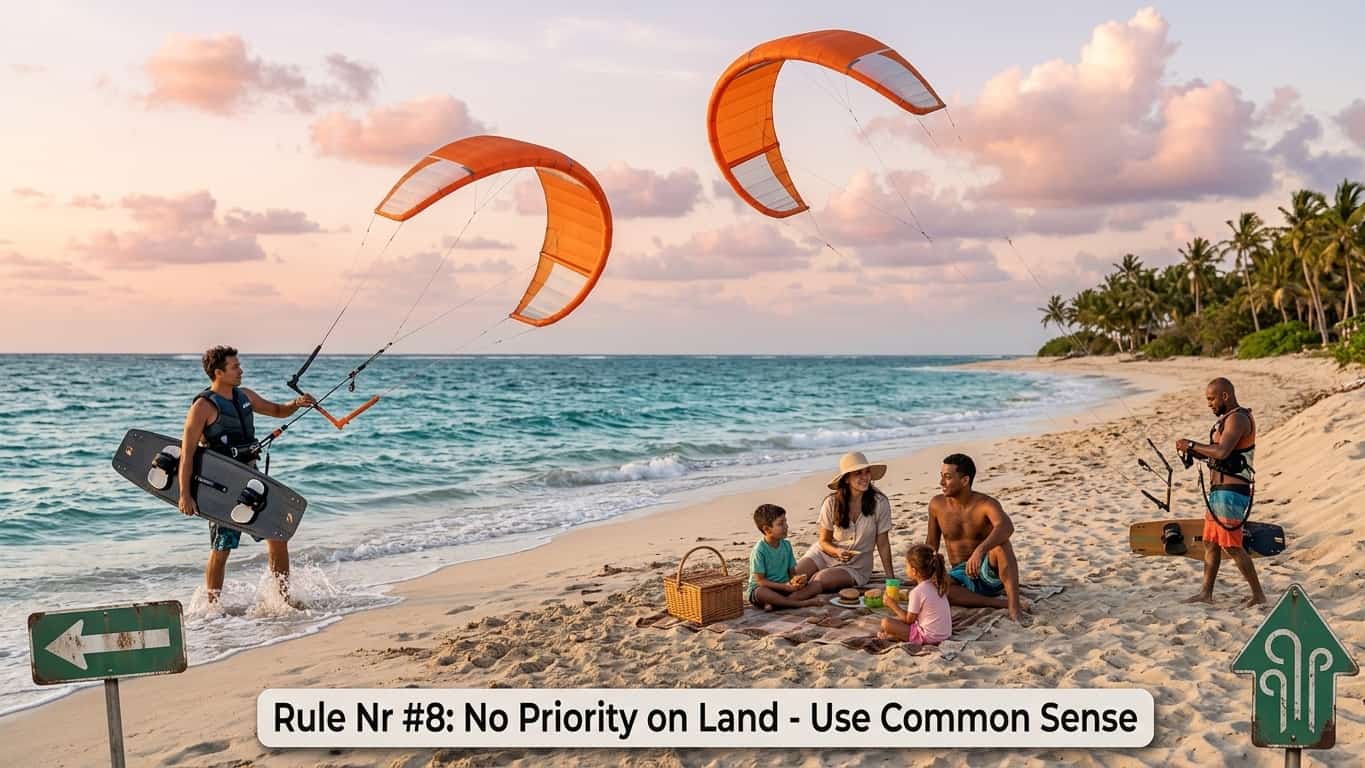
- No Priority on Land (Use Common Sense): Beach launches can be unpredictable. Work together, communicate clearly, and clear launch zones as soon as your kite is up.

Pro Tip: Ride Defensively
Never assume the other rider knows the rules! Especially in un-zoned, packed spots like Dakhla or crowded home spots, defensive riding is key. Carving out your own low-traffic zone with short runs is a smart way to stay safe, but when crossing paths with others, avoiding a crash is always your top priority. Stay aware, ride predictably, and keep the vibes friendly on the water.