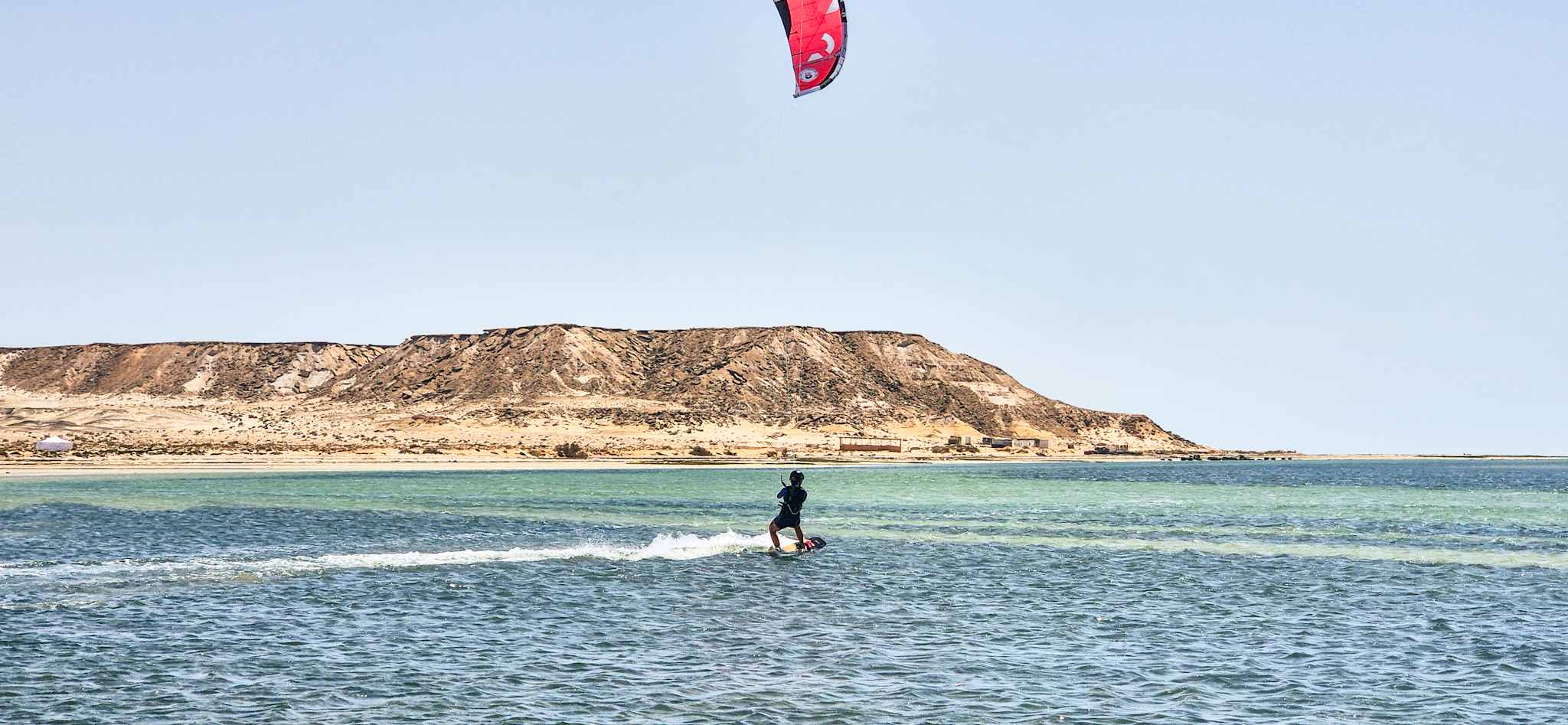
Secret Spot in Dakhla is one of Morocco’s most unique kitesurf locations. A simple Bedouin‑style camp, flat‑water lagoon, high‑tide channels, and steady wind make it ideal for both beginners and experienced riders. Here’s an honest look at the camp, the conditions, and why Secret Spot stands out from the busy main lagoon.
Why Secret Spot Stands Out Secret Spot isn’t just another Dakhla camp — it’s the one place where you truly feel the desert around you. No big resort, no crowds, no noise. Just ten Bedouin tents, endless space, and a lagoon that feels like it belongs only to you. It’s raw, simple, and beautifully disconnected from everything else. If you want the most authentic, peaceful, and spacious kitesurf experience in Dakhla, this is the place.
Quick Facts
- Wind: 70–90% windy days depending on season
- Best Months: March–October (strongest), November–February (lighter but consistent)
- Water Depth: Mostly waist‑deep at mid–high tide
- Vibe: Quiet, raw, communal, nature‑focused
- Level: Perfect for beginners, freestyle, and progression
✈️ Getting to Dakhla — A Bit of a Mission, But Absolutely Worth It
Reaching Dakhla isn’t as simple as hopping on a direct flight from Northern Europe. It takes a bit of strategy, a bit of patience, and a quiet prayer that everything lines up. If you’re not the gambling type, this journey might test you — but honestly, that’s part of the charm.
Royal Air Maroc operates most routes to Dakhla, and nearly all of them go through Casablanca. The flight time is roughly seven hours — except for Paris, which has a five‑hour direct flight on Tuesdays — but the real challenge for northerners is the connections. There are no direct flights from Denmark, Germany, or anywhere further north, so for most travelers the trip happens in two steps:
- Fly to a European city with Dakhla departures
- Continue from there, usually via Casablanca
The most practical departure cities are Paris, Bordeaux, Nice, and Marseille (France); Lisbon (Portugal); Rome (Italy); and Gran Canaria, Madrid, or Barcelona (Spain). The trick is simply finding a cheap flight to one of these cities — and giving yourself plenty of buffer time. Dakhla is not the destination where you want to risk a tight connection.
🛂 A Heads‑Up About Casablanca
When you land in Casablanca, you typically have about one hour to find your next gate — and you need to stay sharp. You’ll go through two separate passport checks: one immediately after stepping off the plane, and another when entering the departure gate for the Dakhla flight. It’s slow, it’s chaotic, and it often feels like everyone is cutting the line.
The upside? The Casablanca–Dakhla flight is often delayed, which buys you a bit of breathing room. And if your incoming flight is delayed so much that you miss the connection, Royal Air Maroc will usually put you in a hotel for the night and rebook you on the early‑morning flight.
Also… don’t be surprised if your luggage doesn’t arrive with you. Bags showing up a day late is pretty normal. Welcome to Africa.
🚫 One More Thing: Don’t Bring a Drone
Drones are strictly prohibited in Western Sahara. If you bring one, it will be confiscated — no discussion, no exceptions. Security checks specifically look for drones in both carry‑on and checked luggage. Leave it at home.
🧭 My Route
I flew Vueling from Copenhagen to Barcelona, with a four‑hour layover before the Casablanca flight — enough time to relax and not stress about delays. On the way home, I had to stay overnight in Barcelona because there were no early‑morning connections, but an extra evening in Barcelona is hardly a punishment.
Dakhla — The Kite Capital
A Look at Secret Spot Dakhla
Tucked away some 20 kilometers from the main lagoon on the route to Mauritania, you’ll find a camp called Secret Spot—secret because it truly is off the beaten track. With no signage to show where to turn and only a bumpy dirt road leading the way, the journey itself hints at how hidden this place really is.
The camp is simple and consists of around ten Bedouin‑style tents set on a large concrete base, secured with ropes to withstand the relentless wind. The tents show their age—the canopy is worn, the zippers have long since stopped working—but they still do exactly what they’re meant to do: give you the feeling that you’re on an adventure.
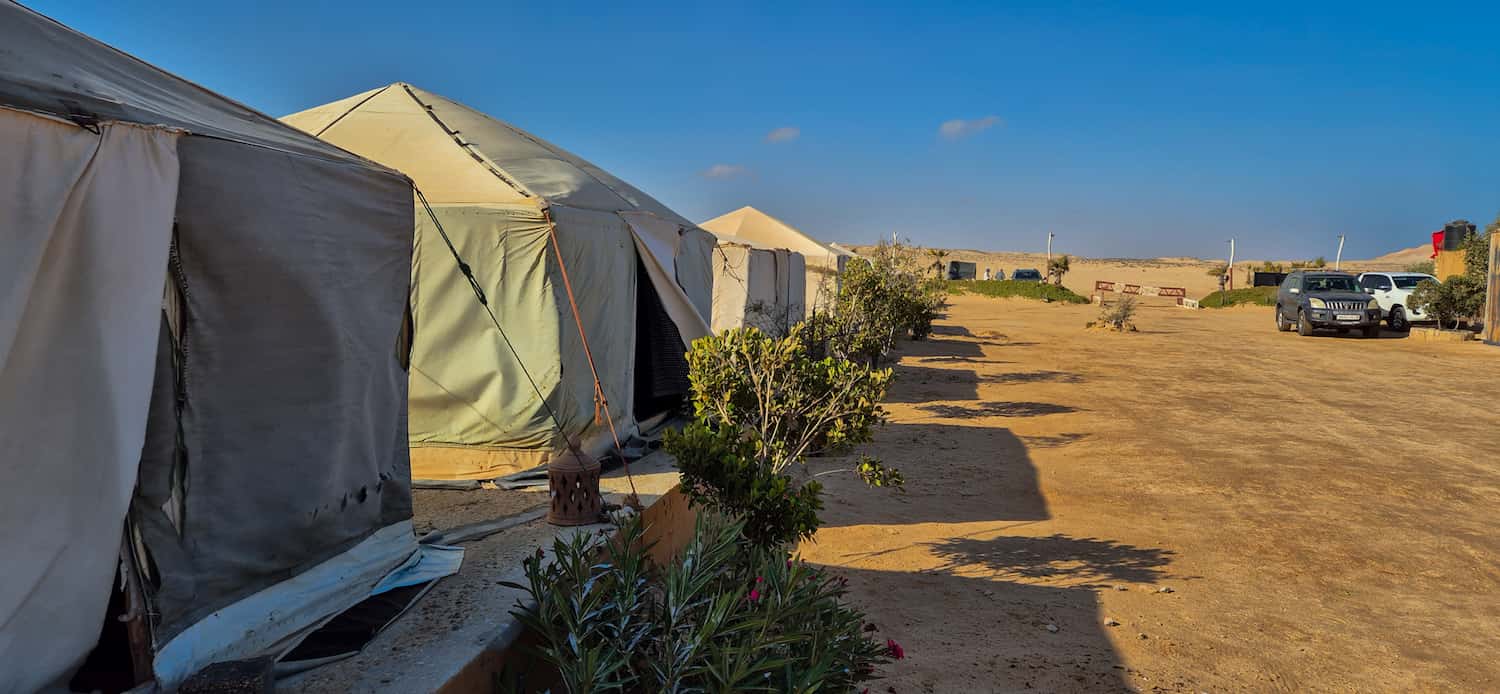
Inside, the tents are surprisingly spacious. An Arabic‑patterned carpet covers the entire floor, and the rest is kept simple: three thick mattresses with clean sheets and a blanket—more than enough for a pleasant night, as evenings are relatively warm in this part of Africa. A small cupboard holds your essentials. It’s basic, yes, but you quickly realize it’s comfortable too, and that luxury isn’t always necessary to feel at ease.
After dark, a single light bulb provides a soft glow inside the tent. Each tent has electricity, just enough to charge your devices. Nights feel cosy as you lie there listening to the canopy ripple and bounce in the whistling wind.
Life at the Camp
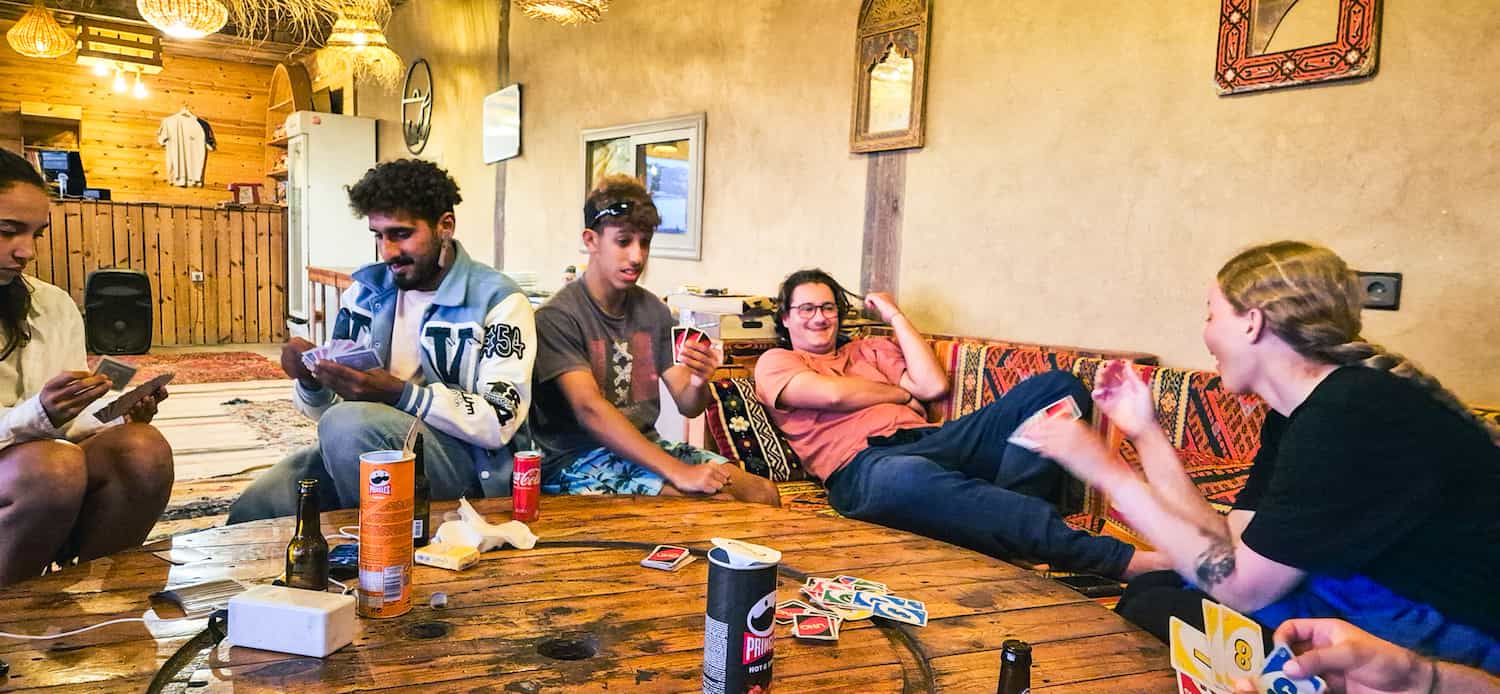
The main building sits at the center of the complex, and it’s where everyone naturally gathers—the dining hall. This is where we spend most of our time when we’re not out kiting: chatting with other travellers about the day’s sessions, playing cards or darts, or simply enjoying a good book. Different corners of the room are arranged with sofa‑style benches and cushions, so you can choose whether you want to join in the conversation or retreat into a quiet spot to read on your own.
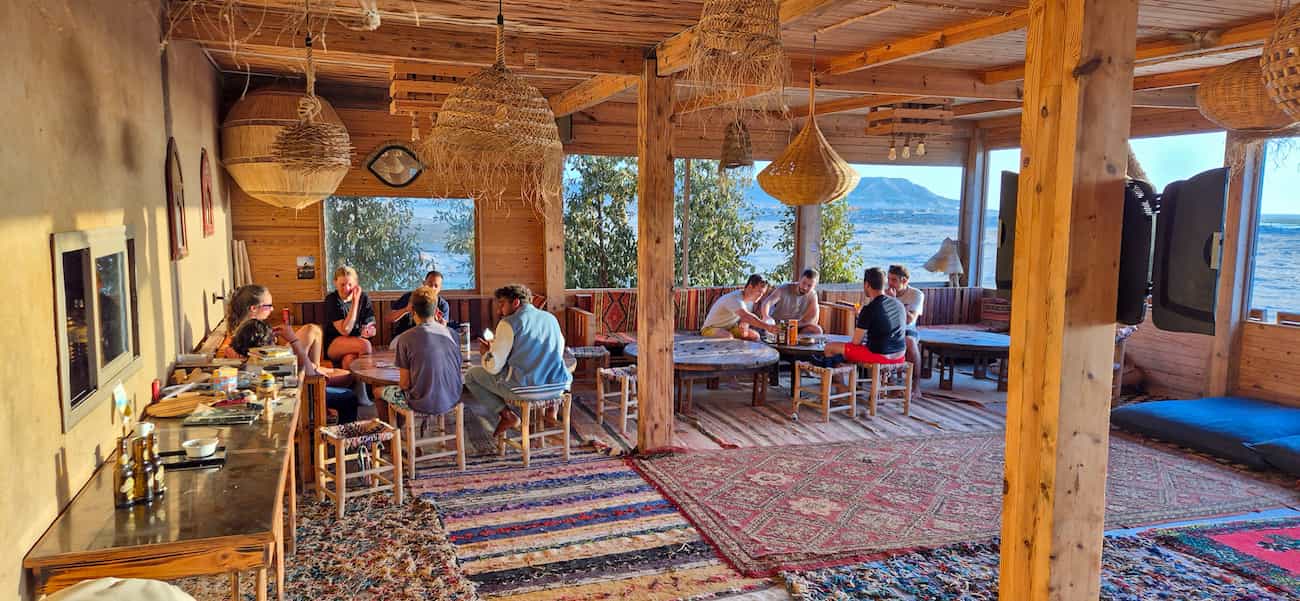
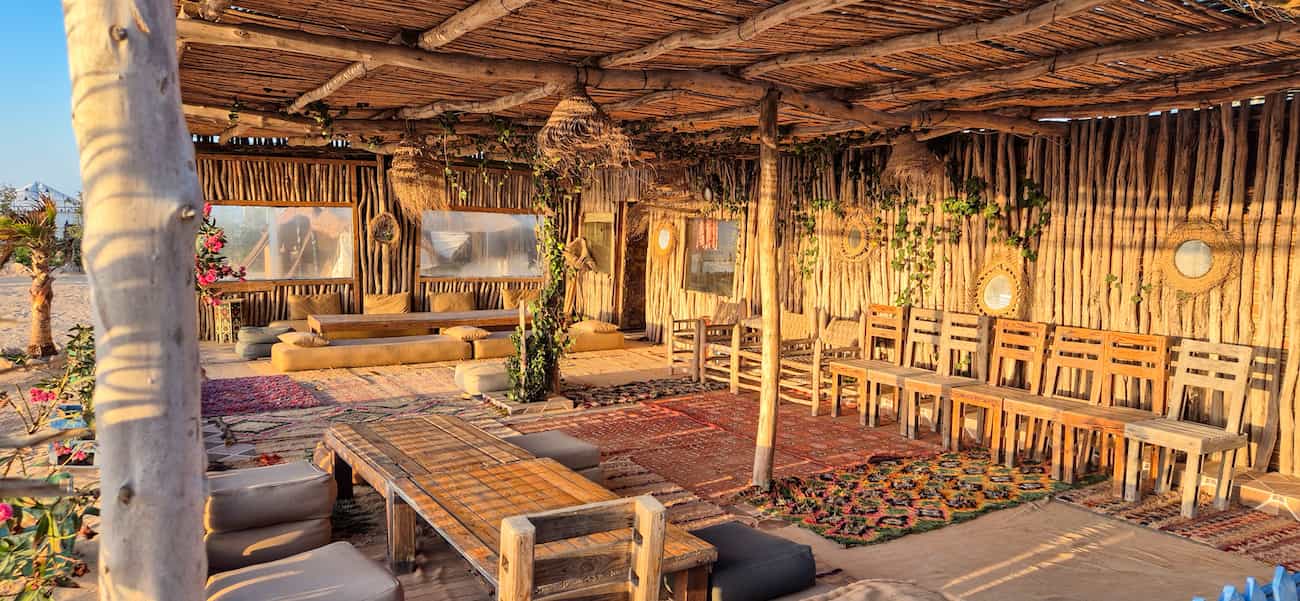
Provisions can be picked up at a small bar in the corner of the room, where you’ll find soft drinks, water, snacks, coffee, and Arabic tea. Everything is self‑service: you take what you need, note it on your tab, and your total is settled when you leave. All meals are shared and served around the main sofa area, creating a communal dining experience. Conversations flow in many languages, though the crowd is often largely French—depending on the time of year.
Moroccan food is one of the world’s great culinary traditions—rich, aromatic, and shaped by centuries of Berber, Arab, Andalusian, and Mediterranean influence. It’s all about slow cooking, bold spices, and communal eating, and the food served here is no exception. Meals often finish with a plate of sweet, fresh fruit. Breakfast runs until 10, lunch is served around 13:00, and dinner is usually at 20:00.
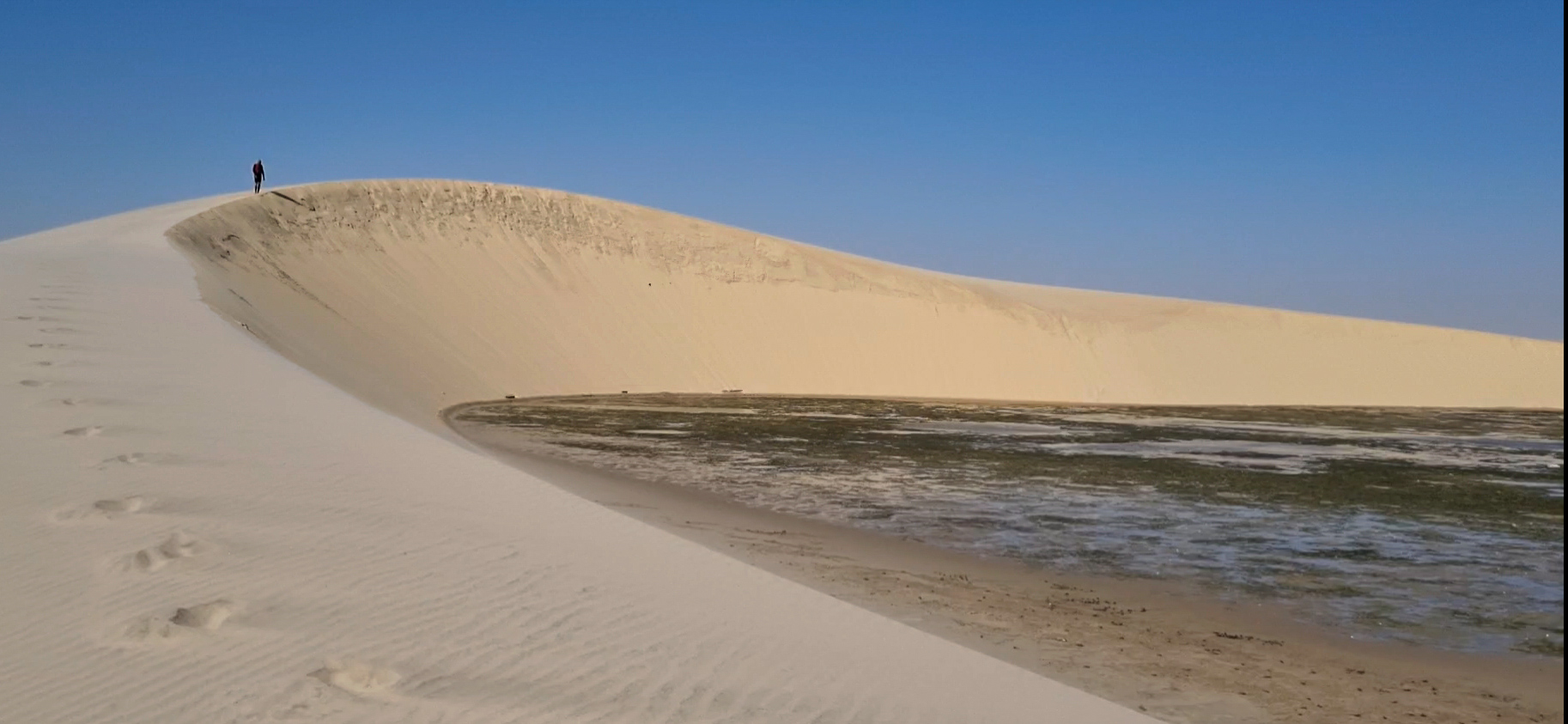
The famous White Dune — and if you’re a confident kiter, try launching from the top at high tide and landing board‑on in the lagoon below. A true Dakhla classic.
The camp has communal facilities, with two toilets and two showers that provide hot water. Because water is scarce in this region, a lorry comes by from time to time to refill the tanks, so it’s worth being mindful when you shower.
The facilities may be basic, but the price you pay for everything you get here more than makes up for it. At 50 euros per day, it’s a steal—especially when you consider that hotels at the main, overcrowded lagoon can cost up to 150 euros a night. Yes, those places are more comfortable, with a wider variety of food, a pool, and plenty of amenities. But somehow, that’s exactly what makes Secret Spot so special. It strips everything back to the essentials and gives you something the big hotels can’t: space, silence, and the feeling that you’re part of the landscape rather than just visiting it.
The Spot
This spot has many positives and a few negatives, but overall it’s an amazing place to kite. Let’s get the negatives out of the way first: the tides. There are four tides every day, shifting roughly 45 minutes daily. Depending on when you arrive, you might hit a period where the lagoon is kiteable only once a day.
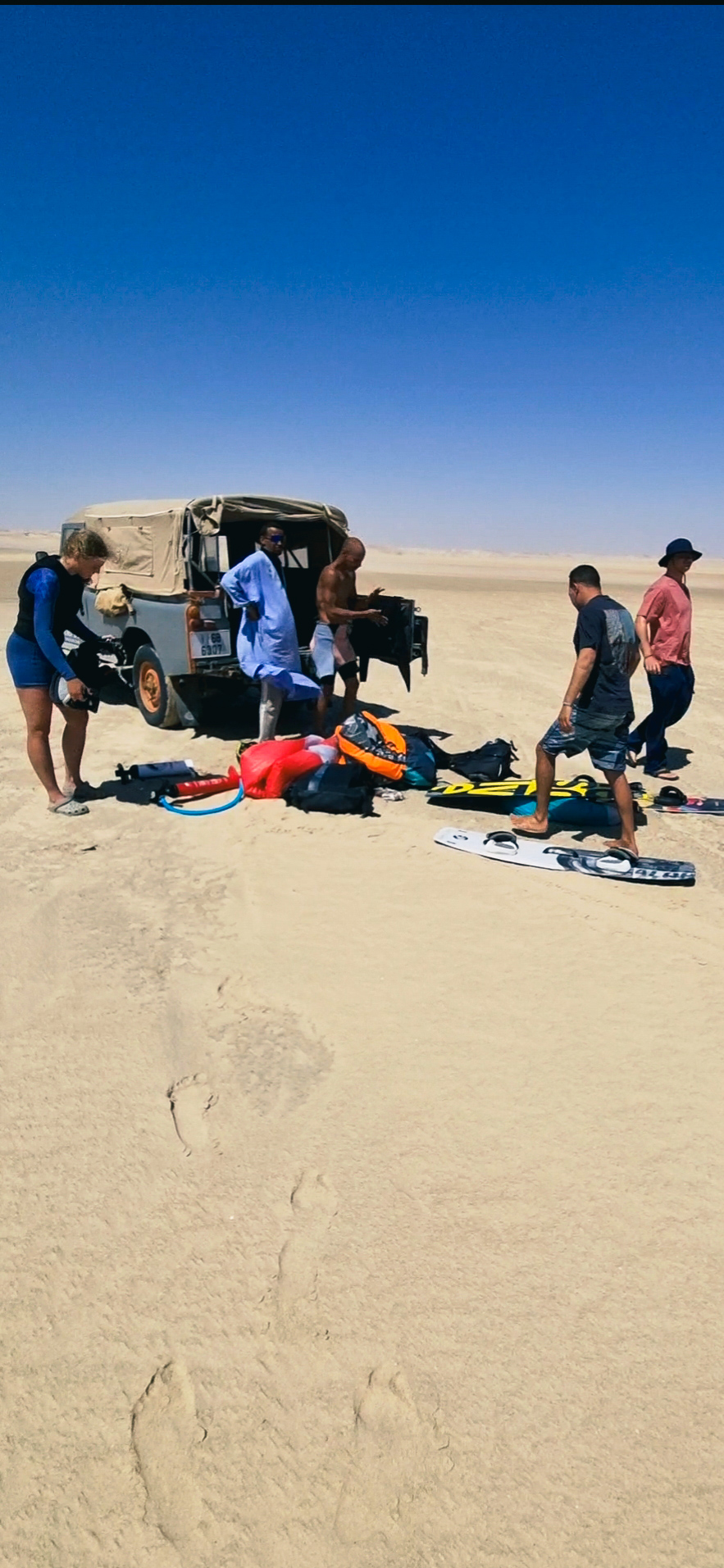
But fear not—the camp has a solution. If the lagoon isn’t kiteable during normal kiting hours, they provide transport to the White Dune. And this is where a negative suddenly turns into a positive.
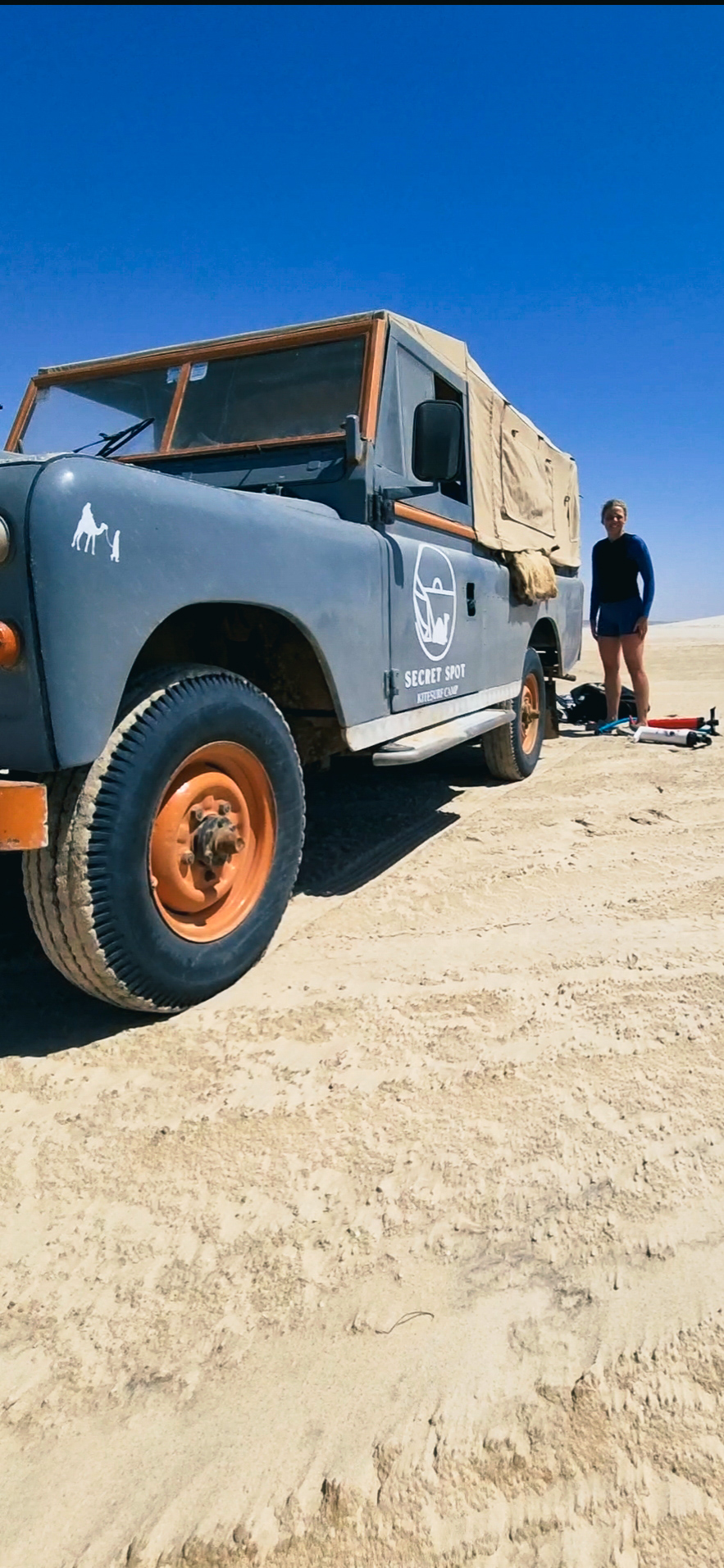
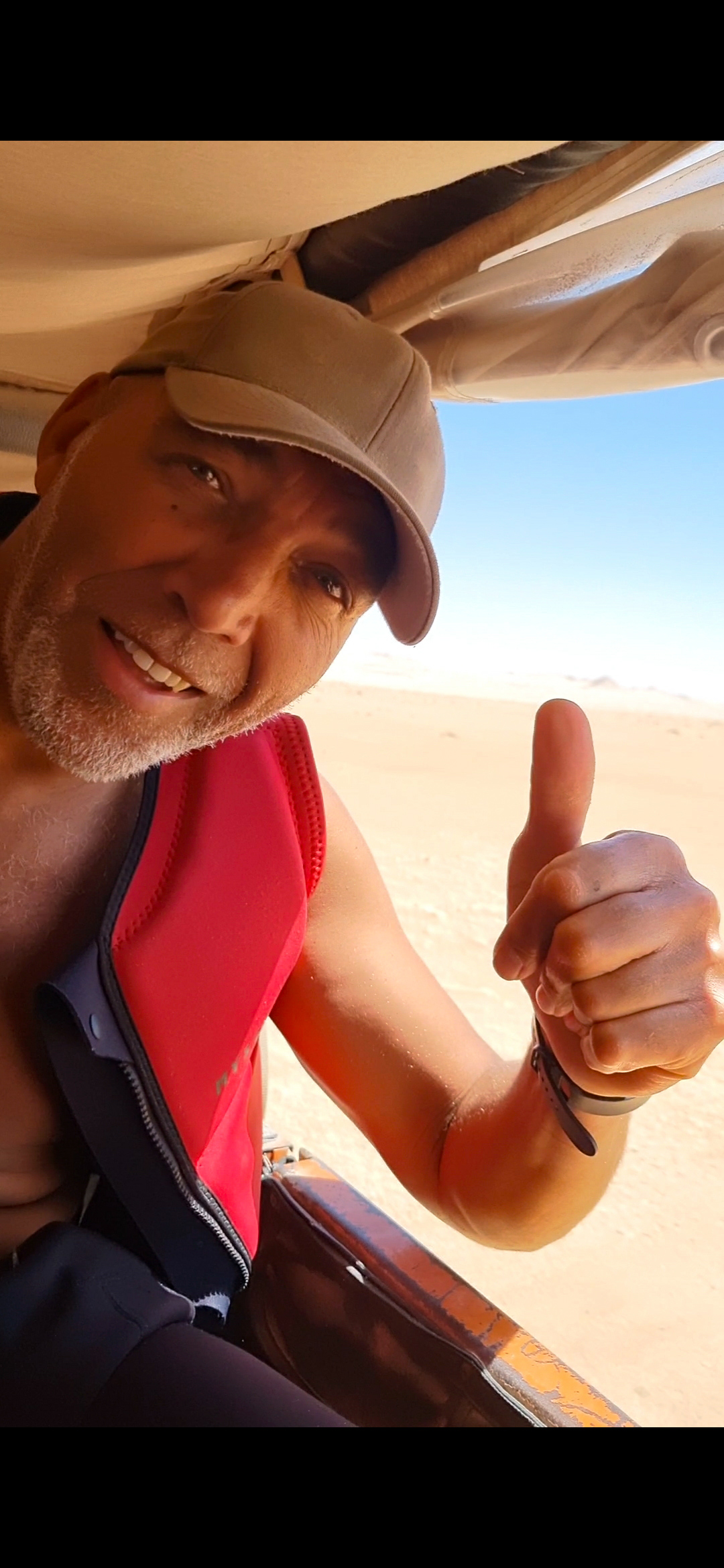
The ride itself is an experience. You sit in the back of a very old Land Rover, holding onto the metal railings as it rattles and bounces across the sand. The White Dune sits about 5–6 kilometers away and can be seen from the camp, but getting there feels like a small adventure in its own right. The wind in your face, the engine growling, the desert stretching out around you—it’s rough, simple, and incredibly fun.
And yes—the wind here can be gusty. Secret Spot sits tucked behind dunes and rocky terrain, so the wind has to travel over land before it reaches the lagoon. As it rolls over the uneven ground, it gets disturbed, lifted, and pushed around, creating the sudden lulls and bursts you feel on the water. The shape of the lagoon adds to it too; it narrows in places, almost like a funnel, so the wind speeds up and slows down as it squeezes through. Add the heat rising from the desert during the day, mixing with the cooler air from the ocean, and you get a wind that pulses rather than blows in a straight, steady line.
But somehow, that’s part of the charm. The gusts keep you alert, the conditions change from hour to hour, and when you finally find your rhythm, it feels earned. It’s not the polished, predictable wind of the main lagoon—but it has character, and it makes every session feel like a small adventure.
If you can, plan your stay to coincide with the spring tide to get the most out of the spot. During spring tides, the water levels in the lagoon stay high for most of the day. That’s when this place truly peaks. One of the unique features of Secret Spot appears at high tide: the reeds create natural channels that you can ride through, carve around, or even jump over. They form long, silky‑smooth corridors of flat water—something you won’t find at the main lagoon.
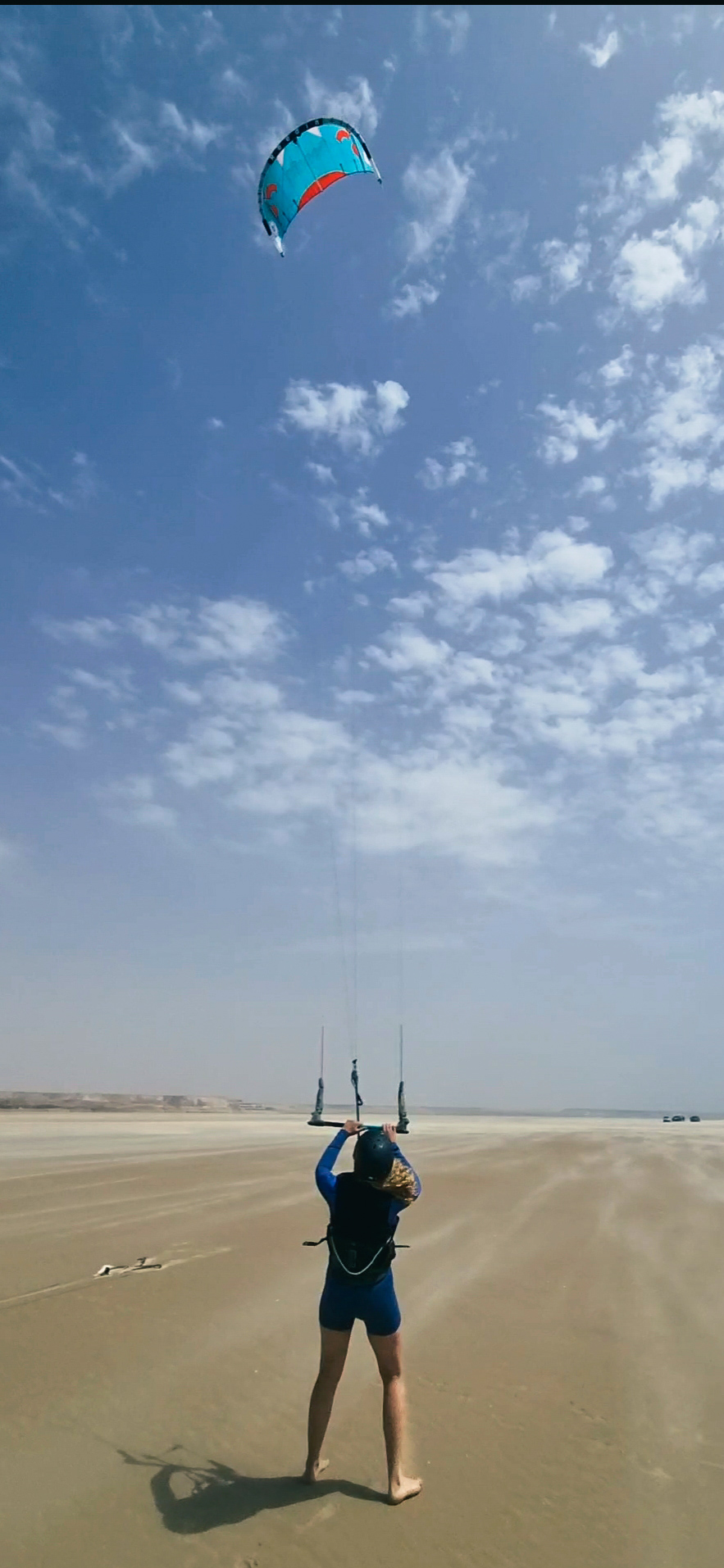
Wind Conditions – When to Go
Dakhla is known for its remarkably reliable wind. The strongest and most consistent months typically run from April to October, when the thermal effect and trade winds combine to create steady, powerful conditions almost daily. Even outside the peak season, you often get several kiteable days each week, which is why riders return year after year — the wind here rarely disappoints.
The Positives for Kitesurfing
Space — real, glorious space. Even when the wind is good, you’re never dodging crowds or fighting for your own line. You can cruise, practice tricks, or enjoy long, uninterrupted tacks. It’s freedom you rarely get at the main lagoon.
Flat‑water perfection. When the tide is right, the lagoon becomes a sheet of glass. Every carve, pop, and landing feels controlled and effortless. It’s a dream for progression.
A forgiving playground. Much of the lagoon is shallow, making it ideal for learning or pushing yourself. Crashes feel less intimidating, and retrieving your board is easy.
The high‑tide channels. Those narrow channels between the vegetation are one of the spot’s hidden gems. They’re perfect for speed runs, carving, and playful exploration. They give Secret Spot its own rhythm.
Powerful wind when it fills in. When the wind settles, it has real strength. You get solid pull, good lift, and the chance to ride smaller, more responsive kites.
The White Dune sessions. A bonus adventure when the lagoon isn’t kiteable. Riding beside the towering dune in more open water adds variety and excitement to your trip.
A raw sense of adventure. Kiting here feels real. You’re riding in a place shaped by wind, sand, tide, and time. Every session feels like part of the landscape.
The Positives Beyond Kiting
First, the space. Unlike the main lagoon, which can feel crowded and chaotic, Secret Spot gives you room—on the water, on the beach, and in your head.
Second, the atmosphere. There’s a relaxed, communal vibe you simply don’t get at the bigger hotels. People talk, share stories, play cards, drink tea, and actually connect.
Third, the adventure factor. Everything here has a slightly rugged edge—the tents, the wind, the old Land Rover rides. It all adds up to an experience that feels real and memorable.
Fourth, the scenery. The lagoon, the dunes, the desert light—every hour looks different. Sunrise paints the water, midday turns everything sharp and bright, and sunset drops a golden glow over the whole place.
And finally, the simplicity. Life here is stripped down to the essentials: kite, eat, rest, talk, repeat. No distractions, no noise, no pressure. Just wind, water, and the feeling of being far away from everything that normally fills your days.
📶 Mobile Phone Coverage
Coverage at Secret Spot is surprisingly decent considering how remote it is. Maroc Telecom works best, followed by Orange. You’ll usually have 3G or 4G around the camp, but don’t expect high‑speed data. It’s enough for messages, weather checks, and sending a few photos — not for uploading big videos or working online.
🛒 Need Supplies?
If you run out of sunscreen, snacks, or anything else, the camp staff will happily buy it for you in Dakhla town. They drive there regularly and can pick up whatever you need. Just let them know — it’s one of the perks of staying somewhere small and personal.
🧥 Wetsuit & Water Temperature
The water in Dakhla stays between 18–22°C most of the year. A 2–3 mm full suit is perfect for spring and autumn, while a shorty works well in summer. If you get cold easily, bring the full suit — the wind can make sessions feel cooler than the temperature suggests.
🎓 Is Dakhla Good for Beginners?
Yes — Dakhla is one of the best beginner spots in the world. The lagoon is shallow, flat, and forgiving, with plenty of space and consistent wind. Secret Spot is especially beginner‑friendly because it’s quiet and uncrowded, so you can learn without pressure or chaos around you.
Closing Thoughts
What stays with you after leaving Secret Spot isn’t the comfort of the tents or the convenience of the facilities — it’s the feeling of having stepped into a different rhythm of life. Days are shaped by wind and tide, not by schedules or screens. You wake with the first light over the lagoon, spend your hours chasing wind across glassy water, and end your evenings sharing food and stories with people who arrived as strangers and leave as friends.
There’s a purity to it — a simplicity that strips everything down to what actually matters. The desert, the wind, the water, the quiet. The small adventures, like clinging to the back of the old Land Rover on the way to the White Dune. The thrill of carving through high‑tide channels. The glow of the tent at night as the wind hums overhead.
Secret Spot may not be luxurious, but it offers something far rarer: a place where you can breathe, ride, disconnect, and feel completely present. It’s a reminder that sometimes the best experiences aren’t the polished ones — they’re the ones that leave sand in your shoes, wind in your hair, and a story you’ll tell long after you’ve gone home.
If you want to see more photos, check the wind statistics, or plan your own trip, you can visit the camp’s website here: secretspot-dakhla.com.
If you’re planning a longer kite trip, you might also like our Kenya - Diani Beach: More Than Just Kitesurfing and other Travel Tips to save money on flights and baggage.
FAQ – Secret Spot Dakhla
Yes. Dakhla is famous for its reliability, with windy days most of the year. Summer is the strongest, winter is lighter but still good.
The camp accepts card for most things, and if you need small items from town, the staff usually add it to your tab. Still, it’s smart to carry a bit of cash in euros, just in case.
No — and that’s part of the charm. If you need connectivity, you can purchase a local SIM card directly from the camp staff, so there’s no need to go into town.
About 25–30 minutes by car. You won’t go often, but the staff can pick up anything you need.
Mostly French. Most of the staff speak understandable English, so communication is usually easy enough for international guests.